


Call for UN Administered Elections in Iraq
English version below
نداء لرئيس الولايات المتحدة والمجتمع الدولي من اجل اشراف الأمم المتحدة على الانتخابات في العراق
كان الحكم بالتوافق سياسةً مناسبةً للعراق عام ٢٠٠٣. تعود الفكرة الأصلية إلى أرند ليبهارت، الذي وصف نموذجًا مثاليًا للديمقراطية التنموية في مجتمعٍ مُجزّأ، حيث يتمتع ائتلافٌ واسعٌ يضم جميع قطاعات المجتمع بتمثيلٍ نسبيٍّ عالي وحق نقض متبادل لتمارس الديمقراطية في برلمانٍ من مجلسين مع الرجوع للاستفتاءات الشعبية بكثرة. وكان من المتوقع أن تصل الأحزاب المتنازعة إلى حالةٍ سياسيةٍ طبيعيةٍ من خلال تكرار عملية التوافق.
وقد طرأت انحرافاتٌ كبيرةٌ عن نموذج ليبهارت منذ البداية. فقد تم حلّ الجيش العراقي وحُرم أفراده من معاشاتهم التقاعدية، مما لم يترك لهم خيارًا سوى الانضمام للجماعات الإرهابية من اجل توفير مستلزمات المعيشة. كما جرّم برنامج اجتثاث البعث الأبرياء لمجرد الانتماء. ومن الانحرافات المبكرة الأخرى غياب تفعيل المجلس الاتحادي حيث أن البرلمانات المتعاقبة لم تفعل القانون الذي ينشئه، والاستفتاء المثير للجدل على الدستور كان الوحيد الذي تم اجراءه. وقد انتهكت هذه الإجراءات شروط ليبهارت، ولا يمكن وضع اللائمة على افكاره وإنما اللوم يقع على غياب الضوابط للإلتزام بها. لذا فأن تغيير هذه الأوضاع القائمة منذ زمن طويل يعد أمرًا صعبًا سياسيًا ومؤسساتيًا.
مهّدت هذه الانحرافات المبكرة الطريق لتجاوزات لاحقة أكثر خطورة، فهنالك المحاصصة والميليشيات المسلحة تسليحًا ثقيلًا والقانون وتطبيقاته المسيسة، وهذه ليست سوى غيض من فيض الفساد الذي استُخدم للسيطرة على الانتخابات لصالح الأحزاب الحاكمة. وقد خلق تراكم هذه التجاوزات دعمًا مؤسساتيًا لاستمرار الوضع الراهن، لدرجة أن بعض المحللين خلصوا إلى أن التصويت الشعبي لم يعد هو المحرك الأساسي لانتقال السلطة. وتوقع بعض الخبراء استمرار انخفاض نسبة المشاركة في انتخابات عام 2025، ولكن على عكس التوقعات فقد ارتفعت نسب المشاركة من 43% الى 56% وازداد تعداد الأصوات المسجلة بأكثر من 2.5 مليون صوت، وذهبت معظم الأصوات إلى الأحزاب المؤيدة للوضع الراهن مما أفقد الخبراء الأمل في الإصلاح من الداخل. وقد جعل هذا التغيير من شبه المستحيل على الجماعات الصغيرة المنافسة، مما .كرس ترسيخ هيمنة الكتل العرقية والطائفية الكبرى
أدت الزيادة الهائلة في المشاركة والتحول في الأصوات الشعبية للأحزاب الحاكمة إلى فرض موقفهم التفاوضي وخنق دور الأحزاب العلمانية والإصلاحية، مما لا يترك مجالاً للشك في أن التصويت الشعبي هو العامل الأساس للتغير السياسي. إن غياب المساءلة سمةٌ بارزةٌ للنخبة الحاكمة، ولإعادة المساءلة، يجب أن يبدأ الإصلاح من أعلى الهرم. إن ضمان نزاهة الانتخابات يعيد المساءلة إلى كبار مسؤولي الدولة، ويعيد تفعيل الغاية الأساسية للديمقراطية: وهي الانتقال السلمي للسلطة.
توضح البيانات التالية مقادير الزيادة في الأصوات الشعبية للاحزاب الكبيرة بين انتخابات 2021 و 2025.
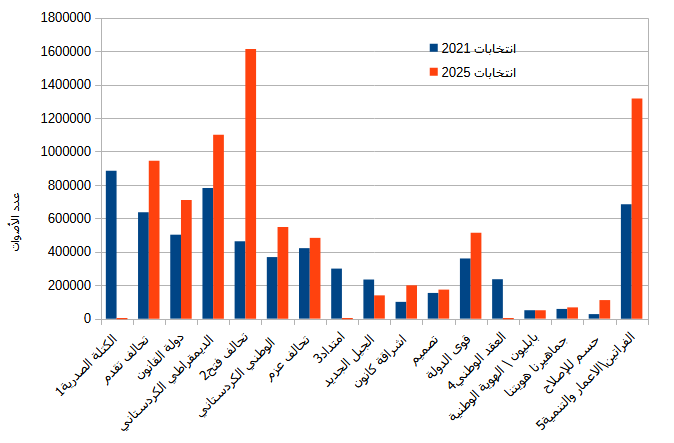
2- تحالف فتح ضم 17 حزب أو تجمع في انتخابات 2021، مجموع الأصوات في خانة 2025 يمثل ستة منها والباقي لم يكن من الممكن رصدها.
3- حركة إمتداد قاطعت انتخابات 2025.
4- تجمع العقد الوطني لفالح الفياض انضم إلى إئتلاف الإصلاح والتنمية لمحمد شياع السوداني في 2025.
5- إئتالف الإعمار والتنمية لم يكن موجودا في انتخابات 2021 ومجموع الأصوات يمثل ثلاثة من مكوناته وهي تيار الفراتين والعقد الوطني وإئتلاف الوطنية. لم تكن أصوات الأخيرة متوفرة لعام 2025 لذا استعملت أرقام من 2018.
ليست الدعوات لإدارة الأمم المتحدة للعراق بجديدة، فقد أطلق الشيخ زايد بن سلطان آل نهيان، رحمه الله، وعدد من الشخصيات العراقية البارزة دعوات منفصلة في عام 2003. وفي سبتمبر من العام نفسه قدمت فرنسا وألمانيا وروسيا تعديلات على قرار لمجلس الأمن صاغته الولايات المتحدة، تضمنت التعديلات إدارة الأمم المتحدة للانتخابات، إلا أن وزير الخارجية الأمريكي آنذاك، كولن باول، سخر من فكرة التخلي عن السلطة خلال مقابلة مع قناة الجزيرة.
ومنذ 2008 فقد تبنى هذا المنبر عدداً من الالتماسات للمطالبة بإجراء انتخابات تحت إشراف الأمم المتحدة . كانت الدعوات لإدارة الأمم المتحدة قبيل سقوط نظام صدام حسين تعني الانتداب من مجلس الأمن لدرجات متفاوتة، وهذا يعني التموضع العسكري لقوات اجنبية على ارض العراق وبالتالي فقدان السيادة، لكن دعوات منبرنا هذا فضلت حصر دور الأمم المتحدة في الإشراف على الانتخابات، والحجة وراء ذلك هي للحفاظ على قدر من السيادة التي تفقد في حالة الانتداب، ومن وجهة نظر المجتمع الدولي فأن التدخل العسكري مكلف ماديا ومرفوض سياسياً، لذلك ندعوكم لاضافة إمضائكم على ندائنا ادناه.
Call to the US President and the International community for UN Administered Elections for Iraq
Governing by consociation is a policy that made sense for Iraq in 2003. The original idea belongs to Arend Lijphart, who described an ideal developmental democracy for a fragmented society, where a grand coalition of all significant segments of society has high degree of proportional representation with mutual veto power, to practice democracy in a bi-cameral parliament and frequent use of referendums. The conflicting parties are expected to reach political normalcy by repeating the process of reaching consensus.
There were significant deviations from Lijphadt’s recipe from the beginning. The Iraqi army was disbanded and its members were left without pension, this left them no choice but to join terrorist groups in order to survive, and the de-Baathification program criminalized innocent people simply by association. Both actions violated Lijphart’s representation for all significant segments condition. Other early deviations are the absence of bicameral democracy; the constitutional requirement for the Federation Council was never realized by successive parliaments, and the controversial referendum on the constitution was the only one to run. Reversing these long standing conditions is politically and institutionally difficult.
The early deviations paved the way for later more significant transgressions. Muhasasa (sectarian apportionment), heavily armed militias and politicised legal systems are the tips of the corruption iceberg. The accumulation of transgressions created institutional support to the continuation of the status quo and pundits concluded that popular votes no longer drive the transfer of power. However, contrary to the predictions, participation rose from 43% to 55% and over 2.5 million increase of registered votes most of which went to parties supporting the status quo. The incredible increase in participation and swing in popular votes of ruling parties led to imposing their bargaining position and stifling the role of reforming secular parties, leaving no doubt that popular vote is the pivot for maintaining the status quo.
Lack of accountability is the earmark of the ruling consensing elite, to restore accountability reform must start from the top. Assuring the integrity of the elections restores accountability of top state officials and reactivates the main process of democracy; The peaceful transfer of power.
Here is a comparison of popular votes between 2021 and 2025 elections.
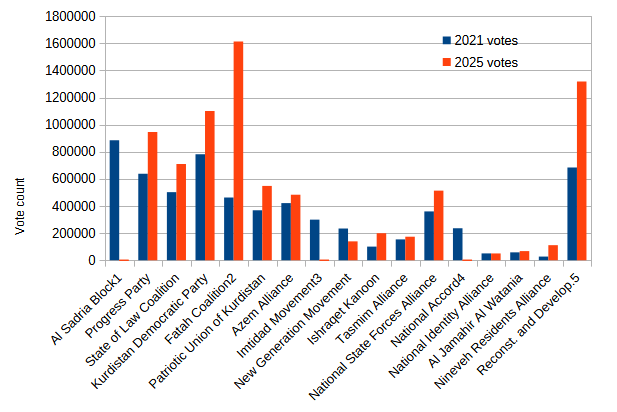
2- Fatah Coalition included 17 parties/blocks in 2021, total votes in 2025 column includes only six, it was not possible to determine the popular votes of the remaining parties.
3- Imtidad Movement boycotted the 2025 elections.
4- The National Accord of Faleh Al Fayadh joined the Reconstruction and Develpment Coalition of Mohamed Shia Al Sudani in the 2025 elections.
5- The Reconstruction and Development Coalition did not exist in 2021, the total here is for three of its constituents: Al Furatain, the National Accord and Watania Coalition. The popular votes of Watania Coalition were not available as a separate entity for 2021, so partial data from 2018 were used.
The calls for UN administration in Iraq are not new, the late Sheikh Zayed of the UAE and prominent Iraqis made separate calls in 2003 . France, Germany and Russia submitted amendments to a US-drafted Security Council resolution in September of the same year, the amendments included UN administration of the elections but the US Secretary of State at the time,Colin Powell, ridiculed the idea of giving up power during an interview with the Arabic television channel Al-Jazeera .
This forum had been involved in calls for UN administered elections in Iraq since 2008 as an alternative to full foreign intervention. Calls before the fall of Saddam had to include wider UNSC mandates including loss of sovereignty and foreign “boots on the ground”. A limited mandate to administer the elections offers a politically more acceptable alternative; more limited time and scope, political acceptability and a lesser intrusion over Iraq’s sovereignty, therefore please add your signature to the petiotion above.